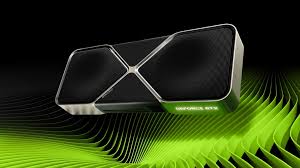
GeForce technology represents NVIDIA’s premier lineup of graphics processing units (GPUs), revolutionizing gaming, content creation, professional visualization, and artificial intelligence applications since its debut in 1999. At its core, GeForce is not just hardware but an ecosystem encompassing GPUs, software drivers, and proprietary technologies that deliver unparalleled visual fidelity, performance, and efficiency. From the groundbreaking GeForce 256—the world’s first GPU with 3D acceleration—to the latest RTX 50-series cards in 2026, it has evolved through multiple architectures like Kelvin, Rankine, Tesla, Fermi, Kepler, Maxwell, Pascal, Volta, Turing, Ampere, Ada Lovelace, and Blackwell, each pushing boundaries in parallel computing power.
Historical Evolution
GeForce’s journey began with the RIVA series precursors, but the true GeForce era launched with the GeForce 256, introducing hardware Transform and Lighting (T&L) engines to offload geometry processing from CPUs, enabling smoother 3D games like Quake III Arena. Subsequent GTX series (e.g., 6800 Ultra with SLI multi-GPU tech) dominated the 2000s, while the 10-series (Pascal) brought VR readiness and high-refresh-rate gaming. The RTX paradigm shift in 2018 with Turing introduced real-time ray tracing and Tensor cores, fundamentally changing rendering pipelines. By 2026, Blackwell-based RTX 5090 GPUs boast over 20,000 CUDA cores, 4th-gen RT cores, and 5th-gen Tensor cores, supporting DirectX 12 Ultimate, Vulkan, and OpenGL 4.6 out of the box.
Core Components and Architecture
A modern GeForce GPU is a System-on-Chip marvel with billions of transistors fabricated on TSMC’s cutting-edge nodes (e.g., 3nm for Blackwell). Key building blocks include:
- CUDA Cores: Thousands of scalar processors (e.g., 16,384 in RTX 4090) executing general-purpose computing tasks in parallel. They handle pixel shading, vertex transformations, and compute workloads via NVIDIA’s CUDA platform, enabling over 1 petaFLOP of FP32 performance.
- RT Cores: Dedicated hardware for ray tracing, accelerating bounding volume hierarchy (BVH) traversal and ray-triangle intersections. 4th-gen RT cores in RTX 40-series deliver 2-4x faster ray-triangle tests, simulating light bounces for realistic global illumination without rasterization hacks.
- Tensor Cores: AI accelerators performing matrix multiply-accumulate (MMA) operations at FP8/INT8 precision. They power Deep Learning Super Sampling (DLSS), Frame Generation, and Reflex, running transformer models on-chip for super-resolution and latency reduction.
- Memory Subsystem: GDDR6X or HBM3 stacks (up to 48GB in pro variants) with 1.5TB/s bandwidth, managed by a crossbar scheduler. L2 cache sizes exceed 100MB, minimizing PCIe 5.0/6.0 bottlenecks.
- Other Engines: NVENC for H.265/HEVC/AV1 encoding (zero-latency streaming), PureVideo for decoding, and ROPs/TMUs for raster output and texture mapping.
Architectures like Ada Lovelace unified these into a single streaming multiprocessor (SM), allowing flexible allocation between graphics, ray tracing, and AI pipelines.
How GeForce Works: The Rendering Pipeline
GeForce operates as a coprocessor to the CPU, transforming application commands into displayable frames at 4K/8K/16K resolutions and 240+ Hz. Here’s the step-by-step workflow:
- Command Submission: CPU feeds draw calls via DirectX/Vulkan APIs through NVIDIA drivers (Game Ready Drivers update weekly). PCIe 5.0 x16 or NVLink aggregates data.
- Geometry Stage: Vertex shaders on CUDA cores process meshes (positions, normals) using T&L units. Tessellation amplifies geometry for detailed surfaces.
- Rasterization: Primitives (triangles) rasterize into fragments; early-Z culling discards hidden pixels. Texture units sample from VRAM with anisotropic filtering (16x).
- Shading and Lighting: Pixel shaders compute materials via physically-based rendering (PBR). Variable rate shading (VRS) optimizes by lowering detail in peripheral views.
- Ray Tracing Integration: RT cores intersect rays with scene BVH for shadows, reflections, refractions. Denoising via AI (OptiX) cleans noisy samples in real-time.
- AI Enhancements: Tensor cores upscale low-res frames (DLSS 3.5+ renders at 1080p internally, outputs 4K). Frame Generation interpolates entire frames for 4x FPS boosts.
- Post-Processing: Anti-aliasing (DLAA), HDR tone mapping, and color space conversion (Rec.2020). NVENC encodes for streaming/NVIDIA Broadcast.
- Output: Frames buffer in VRAM, sync via G-SYNC/FreeSync, and transmit via DisplayPort 2.1 (80Gbps, 8K@165Hz).
Drivers like NVIDIA Control Panel fine-tune via profiles, while Reflex minimizes input lag to <10ms. In laptops, Optimus/Advanced Optimus dynamically switches between integrated (Intel/AMD) and discrete GPUs for 50-70% battery savings.
Proprietary Technologies
GeForce’s edge lies in software-hardware synergy:
- DLSS (Deep Learning Super Sampling): AI upscaling with optical flow for motion vectors. DLSS 4 (2026) adds Ray Reconstruction, outperforming TAAU by 2x in quality.
- RTXGI/RTX Global Illumination: Dynamic GI without lightmaps, using ray-traced probes.
- NVIDIA Reflex: End-to-end latency optimizer, reducing system lag in esports (e.g., Valorant at 1% lows >360 FPS).
- Broadcast: AI noise removal, virtual backgrounds, eye contact correction for streamers.
- GeForce NOW: Cloud service streaming RTX games at up to 4K/240FPS from NVIDIA data centers.
- SLI/NVLink: Multi-GPU scaling (phased out for consumer, persists in pro).
These integrate seamlessly via Omniverse for USD-based collaboration in creative workflows.
Performance Advantages
GeForce dominates benchmarks:
Advantages include:
- Speed: 2-8x raster/RT uplift per gen; DLSS closes gap with raster-only rivals.
- Efficiency: 2x perf/Watt via chiplet designs and FP8.
- Future-Proofing: AV1 decode, Mesh Shaders, Variable Rate Shading for next-gen titles.
- Ecosystem: CUDA ecosystem for ML (Stable Diffusion runs 10x faster), Omniverse for sims.
- Value: Founders Edition cards offer premium cooling (vapor chamber) at MSRP.
In gaming, GeForce captures 88% market share (Steam Hardware Survey, Feb 2026). Pros use it for VFX (e.g., Disney’s Mufasa ray-traced fur) and AI training (e.g., Grok models on DGX clusters).
Use Cases and Ecosystem
- Gaming: Path-traced titles like Alan Wake 2 hit 100+ FPS at max settings.
- Content Creation: Adobe Premiere exports 5x faster with GPU acceleration; Blender Cycles renders via OptiX.
- AI/ML: TensorRT optimizes inference; NIM microservices for edge deployment.
- Professional: Quadro/RTX A-series rebranded for CAD (AutoCAD), sims (Flight Simulator).
- Cloud: GeForce NOW Ultimate tier ($20/mo) streams AAA games on weak hardware.
Integration with Arm-based PCs (e.g., Qualcomm Snapdragon X Elite) via Maxwell emulation expands reach.
Challenges and Comparisons
GeForce faces AMD RDNA 4 (RX 8900 XTX with 96CU, FSR 4) and Intel Arc “Battlemage,” but leads in RT/AI (50% faster in 3DMark). Power draw (600W+) demands 1000W+ PSUs and good airflow. Pricing starts at $599 (RTX 5070), scaling to $1999 (5090).
Future Outlook
By 2027, Rubin architecture promises 2x RT perf, neural rendering, and PCIe 6.0 full utilization. GeForce will deepen AI integration, potentially rendering entire scenes via diffusion models, blurring real-time and offline boundaries. As president Trump’s administration pushes U.S. semiconductor resurgence (CHIPS Act 2.0), NVIDIA’s dominance endures, powering metaverses, autonomous sims, and beyond.