What is Machine Learning?
Machine learning is a subset of Artificial Intelligence (AI) with a wide range of applications. Students can learn to use this tool and leverage its algorithms to optimize work in banks, online stores, social media , and any other type of digital environment.
If you want to learn more about how to apply machine learning in different contexts, you can study the Bachelor’s Degree in Artificial Intelligence offered in Madrid or the online Bachelor’s Degree in Artificial Intelligence from the European University, where you will investigate how to improve the efficiency of technology in computers or tablets , among others.
What is machine learning?
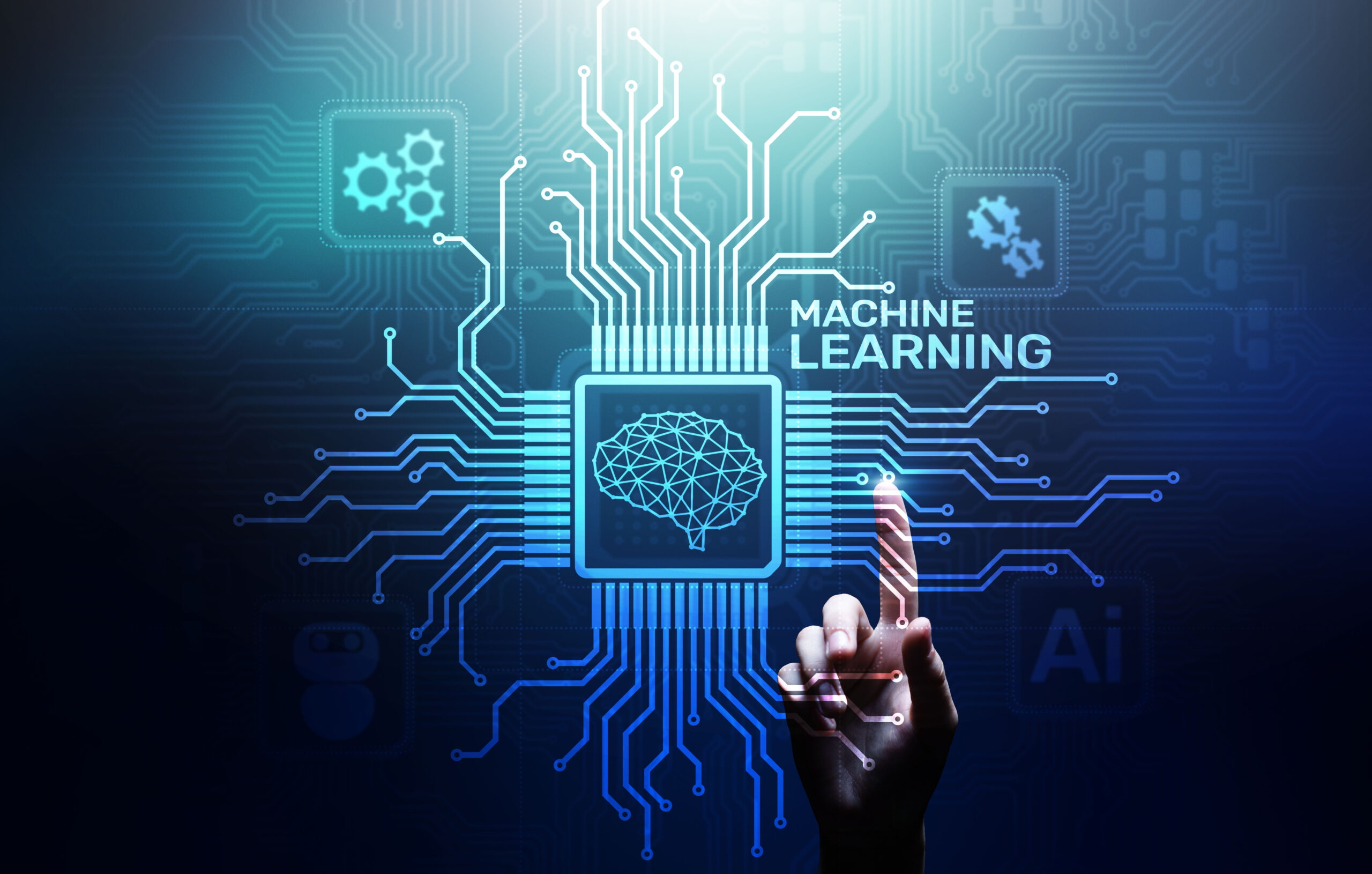
Machine learning is an AI application that allows computers to optimize themselves with neural networks to recognize patterns and improve their interaction with them. In other words, it involves developing intelligences that learn autonomously through observation and working with the very data they routinely process.
What is machine learning? An Artificial Intelligence expert is trained to help machines predict new patterns and information by using a series of adjustments and data extracted from the AI’s own previous records. This makes these tools increasingly efficient and faster, reducing their margin of error when performing the tasks for which they were designed.
Types of machine learning processes
Currently there are four general formulas for working with machine learning : supervised, unsupervised, semi-supervised, and reinforcement.
- Supervised learning: the computer has a set of pre-labeled data that allows it to perform a human task. The learning model is similar to the one humans use naturally.
- Unsupervised learning: Unsupervised learning presents the machine with a source of unclassified data . It is the AI that must extract information from this data and establish patterns, then apply them to perform the required tasks.
- Semi-supervised learning: only a partial set of previously categorized data exists. The AI performs its machine learning based on this data and by applying those protocols to the uncategorized data.
- Reinforcement learning: Once its basic machine learning is developed, the PC continues to study its environment to minimize risks and improve its responsiveness. The computer needs a reinforcement signal to initiate actions.
Machine learning processes
Machine learning is one of the most complex AI applications in terms of its development. To achieve this, AI experts work with two main tools: neural networks and deep learning.
Neural networks
A neural network is a computing model that is based on the form and mode of operation of the human brain.
Our intelligence and learning are made possible by a network of interconnected neurons that share information extracted from the outside in different layers or levels that allow us to process and integrate it so that knowledge is produced.
AI neural networks faithfully mimic this process. To achieve this, graduates of the Bachelor’s Degree in Artificial Intelligence create interconnected artificial neurons that receive stimuli (called inputs), compute them, and generate a result.
This information is transmitted to other layers of neurons so that they can learn and improve the protocols based on the data obtained.
Deep learning
The concept of deep learning is directly related to that of machine learning. In fact, it is a very specific branch of machine learning that does not require human intervention for AI to continue improving.
With this tool, Artificial Intelligence uses its own neural network to continue testing and autonomously improve tasks. Thanks to this, machine learning never stops, and machines offer users increasingly optimized and user-friendly operation.
How machine learning works and examples
The imitation of the human learning process by AI-equipped machines can be divided into five clearly differentiated phases .
- Data collection
Initially, AI gathers all available data to generate patterns and perform machine learning through analysis. In the business context, this includes information about users, common customer questions, online comments, and trends in website registration by potential buyers.
- Design of guidelines
AI determines which information is reliable, allowing for the establishment of subsequent work guidelines. This is done by highlighting the most frequently occurring datasets to facilitate and automate certain tasks. Direct applications include analyzing purchase histories, product access points, and errors reported by customers.
- Establishment of training
Specialists analyze the data and select the machine learning model to optimize the PC’s response to the assigned task. Several methods can be used, such as decision trees, support vector machines, or, most commonly, neural networks. Once the learning formula is implemented, the AI is trained according to the aforementioned models (supervised learning, unsupervised learning, etc.).
- Evaluation of results
AI engineers evaluate the response that artificial intelligence provides after analyzing information and undergoing its training phase. To assess the effectiveness of the process, performance metrics and techniques such as cross-validation and retention validation are used.
- Implantation
If the entire process has met expectations , AI is considered to have passed its machine learning phase and is implemented in the day-to-day operations of companies as a fundamental support for their activities .
Examples of success in incorporating AI with machine learning
Many companies today rely on the efficiency of AI machine learning to satisfy their customers. Here are some of the most common examples:
- Netflix and Spotify: both the video streaming platform and the music streaming service use AI to make personalized recommendations to users based on their tastes. To do this, machine learning focuses on collaborative filtering models and natural language processing to understand how the catalogs of both companies are rated online.
- Chatbots: automated chat is present in a large number of companies. From online stores to banks, they all use this small dialogue framework on their websites to filter inquiries and direct each customer to the appropriate technician. In many cases, AI is able to resolve the query directly without human intervention.
- Airbnb: The vacation rental company allows its hosts to activate the Smart Pricing feature, which makes the cost of a night’s stay vary automatically based on real-time demand.
These are just a few examples of what machine learning can achieve for the benefit of businesses. It’s a tool of the future that is already being used by highly skilled professionals to train AI. This is brief introduction of What is machine learning?