Vector Disease Software: Transforming Public Health Surveillance
Introduction
Vector‑borne diseases such as malaria, dengue, chikungunya, and Zika continue to pose serious global health challenges. These illnesses are transmitted by vectors like mosquitoes, ticks, and flies, and they account for millions of infections annually. Traditional surveillance methods often struggle to provide timely insights, but Vector Disease Software has emerged as a powerful solution. By combining epidemiological modeling, geospatial mapping, and real‑time analytics, these platforms empower public health authorities to predict, monitor, and mitigate outbreaks effectively.
What is Vector Disease Software?
Vector Disease Software refers to digital platforms designed to track, analyze, and forecast vector‑borne diseases. These systems integrate multiple data sources—such as weather patterns, satellite imagery, entomological surveys, and clinical case reports—to provide actionable intelligence.
Examples include:
- D-MOSS: A dengue forecasting and early warning system that uses earth observation data and epidemiological models.
- VectorSurv: A surveillance system that helps agencies manage mosquito and arbovirus data, visualize trends, and make real‑time decisions.
- ABM-EpiVector: A MATLAB toolbox for simulating epidemiological dynamics of vector‑borne diseases.
Key Features of Vector Disease Software
- Real‑Time Data Integration: Collects information from weather forecasts, satellite imagery, and health records.
- Predictive Modeling: Uses AI and statistical algorithms to forecast outbreaks.
- Geospatial Mapping: Visualizes disease hotspots and vector distribution.
- Decision Support Tools: Provides dashboards for public health officials to plan interventions.
- API Connectivity: Allows integration with other health systems for seamless data exchange.
Importance in Public Health
Vector Disease Software plays a crucial role in:
- Early Warning Systems: Predicting outbreaks before they escalate.
- Resource Optimization: Guiding where to allocate insecticides, medical supplies, and manpower.
- Community Awareness: Informing the public about risks in specific regions.
- Policy Making: Supporting evidence‑based decisions for national and regional health strategies.
Case Studies
1. Dengue Forecasting with D-MOSS
Dengue forecasting tools
D-MOSS integrates climate data and epidemiological models to provide early warnings of dengue outbreaks. This allows governments to implement preventive measures such as targeted spraying and public awareness campaigns.
2. Mosquito Surveillance with VectorSurv
Malaria monitoring apps
VectorSurv enables agencies to track mosquito abundance, insecticide resistance, and arbovirus activity. Its mapping tools help visualize risk zones, making it easier to deploy control measures.
Advantages Over Traditional Methods
Challenges and Limitations
- Data Quality: Inaccurate or incomplete data can reduce forecasting reliability.
- Infrastructure Needs: Requires stable internet and trained personnel.
- Cost: Advanced platforms may be expensive for low‑income regions.
- Privacy Concerns: Handling sensitive health data requires strict compliance with regulations.
Future Trends
- AI and Machine Learning: More sophisticated algorithms for outbreak prediction.
- Mobile Health Apps: Expanding access to communities through smartphones.
- Blockchain Integration: Ensuring secure and transparent data sharing.
- Global Collaboration: Linking regional systems into international networks for faster response.
Advantages of Vector Disease Software
- Early Warning Systems: Predicts outbreaks before they escalate, allowing preventive measures.
- Real-Time Surveillance: Integrates climate, entomological, and health data for immediate insights.
- Geospatial Mapping: Identifies hotspots and tracks vector distribution across regions.
- Resource Optimization: Guides efficient allocation of insecticides, medical supplies, and manpower.
- Decision Support: Provides dashboards and analytics for evidence-based interventions.
- Community Awareness: Enables targeted communication campaigns to inform at-risk populations.
- Integration with Global Health Systems: Connects with WHO and national health databases for coordinated responses.
Countries Using Vector Disease Software
Kenya and Tanzania: WHO-supported programs employ digital vector control tools to combat malaria and neglected tropical diseases.
Mexico: Supported by the Carlos Slim Foundation, focusing on dengue and malaria prevention.
India: Implements integrated vector management programs and digital surveillance for malaria and dengue.
Vietnam, Laos, and Sri Lanka: Adopted D-MOSS (Dengue Monitoring and Surveillance System), which uses earth observation data to forecast dengue outbreaks.
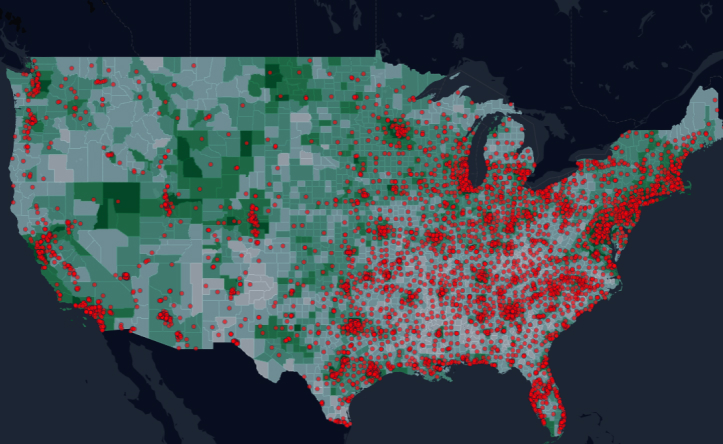
United States: Uses a surveillance system tracking mosquito populations and arbovirus activity across multiple states.