What is CE certification?
The “European Conformity (CE)” certification is a regulatory standard that verifies that certain products can be sold and used safely within the European Economic Area (EEA). Manufacturers affix a CE marking to certified products to indicate that the product complies with European safety regulations and can be freely marketed within the EEA. Unlike other certification marks, the CE marking is not granted by a specific regulatory body, although some products require an independent conformity assessment by a notified body to ensure they meet CE certification requirements. Ultimately, manufacturers are responsible for the correct use of the CE marking on their products.
The requirements for CE marking also have implications for achieving full compliance with the RoHS Directive . Equipment and products covered by the RoHS Directive must comply with the regulations before receiving CE marking, unless they already comply by derogation.
What are CE markings? What is CE certification?
What is CE certification? Manufacturers use the CE marking to indicate that a product complies with European Union (EU) health, safety, and environmental protection regulations and directives. Products bearing this marking have free access to the market within the EEA. As such, the CE marking can be considered a trade passport – EU member states cannot restrict the placing on the market of products bearing the CE marking without adequate evidence of non-compliance.
There are 24 directives that determine which products must bear the CE marking. These directives have different requirements, and several directives may apply to the same product. These products include, but are not limited to:
- Electronic products.
- Medical devices.
- Toys.
- Domestic refrigerators and freezers.
- Personal protective equipment.
- Radio and telecommunications terminal equipment.
Obtaining CE certification
CE marking differs from other comparable certification marks in that no single body or authorising organization issues the certification. Manufacturers must ensure that the CE marking is used correctly and that products comply with all applicable directives and regulations.
Manufacturers must follow these steps to affix a CE marking:
- Identify the applicable harmonized guidelines and standards.
- Check the specific requirements of the product.
- Collect applicable supply chain data for the necessary technical documentation.
- Determine whether an independent conformity assessment by a notified body is necessary.
- Test the product and verify its conformity.
- Create and maintain all necessary technical documentation.
- Affix the CE marking and establish an EU declaration of conformity.
Why do products need to be CE certified?
What is CE certification? For manufacturers and/or importers seeking to sell in the EEA market, CE marking is vital. The CE marking acts as a trade passport in the European market, allowing manufacturers to freely circulate certified products within the 30 countries that comprise the EEA. The CE marking has replaced previous national regulations with a single, harmonized set of rules, eliminating the need to adapt products to the specific requirements of different EEA member states. In short, the CE marking simplifies compliance obligations for manufacturers selling or importing products into the EU.
Easy access to European Union markets with CE marking
About CE Mark Certification

CE stands for Conformité Européenne, which translates from French to English as ‘European Conformity’. CE marking is an EU safety directive that indicates a product has passed certain tests and means it can be legally sold anywhere within the EU and the European Economic Area.
While some products can be CE marked by the manufacturer, others must be tested by a company that offers CE marking services. If a product that should bear the CE mark is found to be missing it, the manufacturer or distributor could be fined and face a costly product recall, making CE marking essential.
Countries that require CE marking
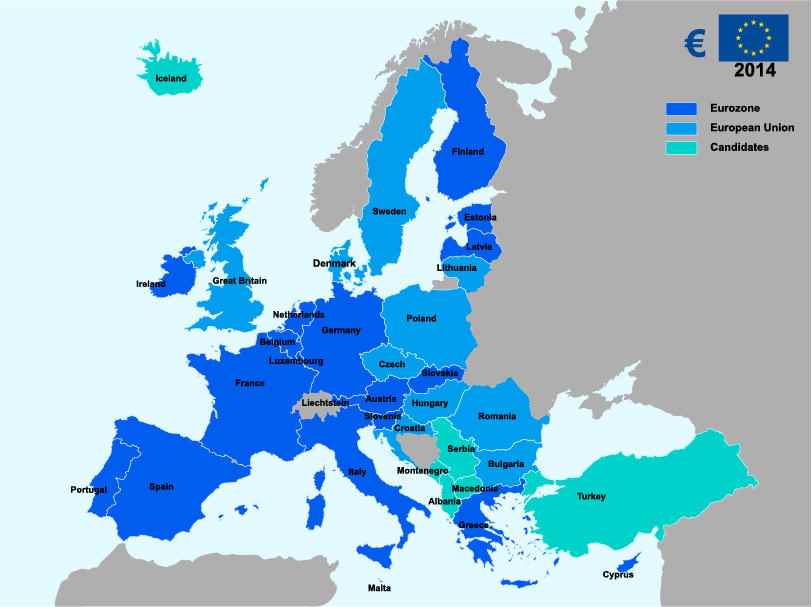
CE certification and marking guarantee that your product can enter the European Union and allows free movement in the 30 countries that make up the European Economic Area, giving you direct access to more than 500 million consumers.
Countries that require CE marking
| Austria | Belgium | Bulgaria |
| Croatia | Czech Republic | Cyprus |
| Denmark | Estonia | Finland |
| France | Germany | Greece |
| Hungary | Iceland | Ireland |
| Italy | Latvia | Malta |
| Liechtenstein | Luxembourg | Republic of Korea |
| Norway | Netherlands | Poland |
| Portugal | Romania | Slovakia |
| Slovenia | Spain | Sweden |
| Swiss | Türkiye |
Visit our UKCA marking page for information on products sold in the UK.
The products require CE marking and applicable EU directives.
What is CE certification? For most products entering the EU, there are harmonized regulations (EU Directives) that must be met depending on the product’s scope. Most directives require a CE marking, a mandatory mark that demonstrates manufacturers’ conformity with the applicable EU directives. Individual country requirements may also apply.
- Construction products
- Construction Products Regulation – Regulation (EU) Number 305/2011
- Electrical and electronic products
- EMC Directive (2014/30/EU)
- RoHS Directive 2
- Waste Electrical and Electronic Equipment (WEEE II) Directive – 2019/19/EU
- Energy-related products (dishwashers, household appliances, air conditioners, boilers, etc.)
- ErP Directive 2009/125/EC
- Low-voltage electrical equipment
- Machinery
- ATEX Directive 2014/34/EU
- Machinery Directive 2006/42/EC
- Outdoor Noise Directive 2000/14/EC: construction equipment, forklifts, cranes, gardening equipment, generators, compressors, etc.
- Marine equipment
- Marine Equipment Directive 2014/90/EU
- Medical devices
- Directive on Active Implantable Medical Devices (90/385/EEC)
- In-Vitro Diagnostic Directive (98/79/EC)
- Medical Devices Directive (93/42/EEC)
- Pressure Equipment
- Radio equipment
- Toys
- Toy Safety Directive (2009/48/EC)
- Portable pressure equipment
How to Obtain CE Marking in 5 Easy Steps:
- Decide which Directives are applicable to your product
- Ensure your product complies with applicable directives through testing and apply the relevant conformity assessment procedures.
- Compile and maintain a technical file that meets the requirements of the Directives
- Draft and sign the Declaration of Conformity and keep the original with the technical file
- Apply the CE marking to the equipment in accordance with the requirements of the Directive
Read More ESG Compliance
About the Author
Alina Taylor
working with AlohaX System as a Web Developer Programmer, Digital Marketing Strategist, and Certification Consultant for the past 2 years. I specialize in developing user-friendly, secure, and scalable websites and software solutions tailored to business needs. Along with development, Design and implement effective digital marketing strategies to improve online visibility, lead generation, and brand growth. Also support clients in ISO and compliance certifications, assisting with documentation, audit preparation, and certification processes. I am passionate about combining technology, marketing, and compliance expertise to help businesses grow efficiently and achieve long-term success.