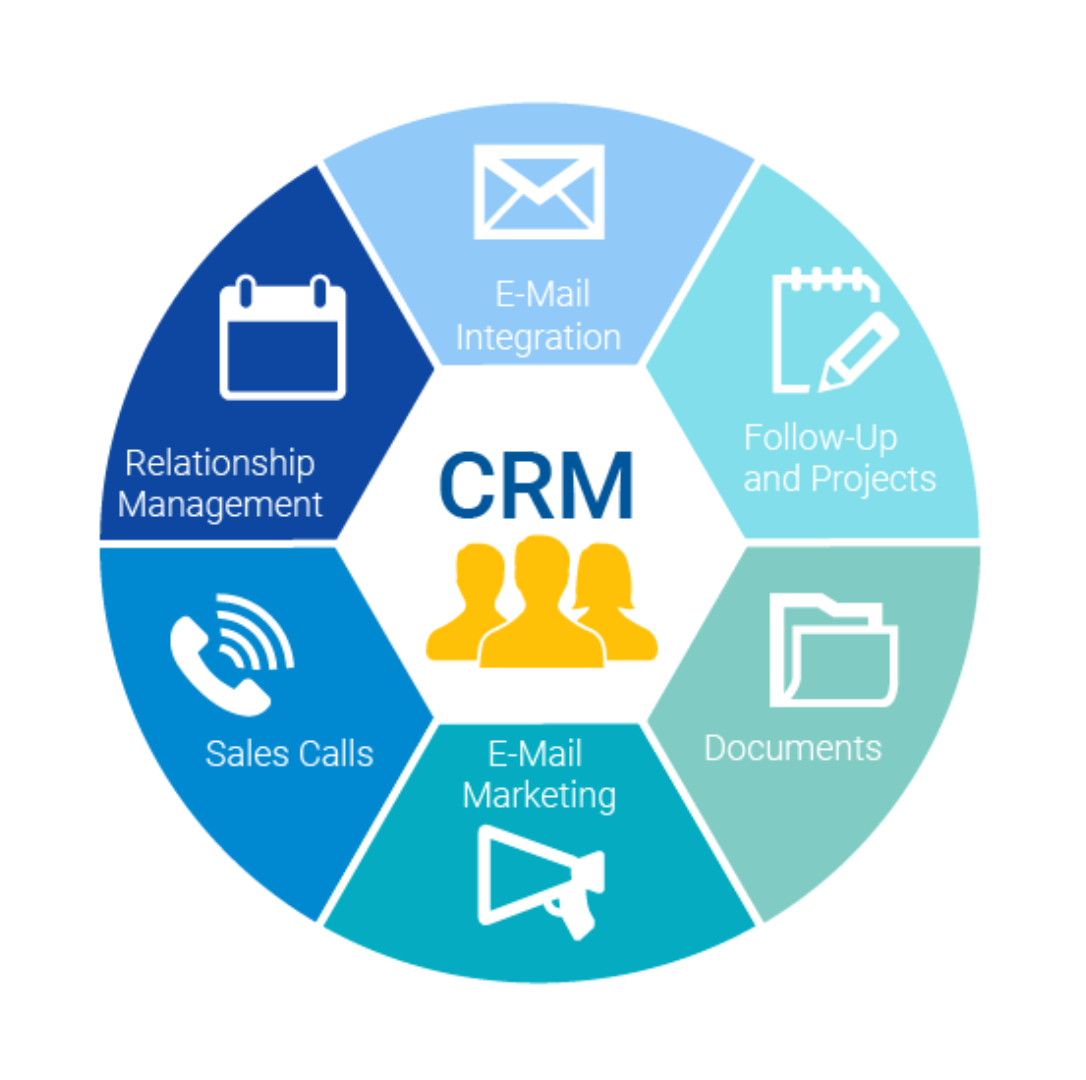
What is CRM? Introduction to CRM
Customer Relationship Management (CRM) systems have revolutionized how businesses manage their customer relationships. It’s not just software; it’s a comprehensive strategy that allows businesses to organize, analyze, and improve their interactions with customers and prospects. Implementing a CRM helps optimize communication, automate tasks, and improve team productivity.
What is CRM software?
The goal of CRM is to respond to customer requests, build customer loyalty, and assist the professionals involved: technicians, marketing, managers, and call center.
What is CRM Software? Simply put, CRM is a tool that connects people. It facilitates communication between businesses and customers while allowing your field teams to communicate with headquarters. Its goal is to respond to customer requests, build loyalty, and support the relevant professionals: technicians, marketing, managers, and call center staff.
Why do we use a CRM?
CRM software offers several advantages:
- Simplify communication between sales, marketing, and customer service departments. Customer information is accessible to employees everywhere, improving their responsiveness.
- Reduce rework by providing mobile workers with suitable work tools: order entry application, intervention report, planning, etc.
- Monitor key performance indicators for each profession by implementing dashboards.
- Enhance your customer knowledge by integrating with your information system. Furthermore, the CRM maintains a history of all interactions.
- Anticipate the causes of your customers’ dissatisfaction
Who is a CRM for?
What is the purpose of a CRM for sales teams?
CRM is a must-have for salespeople. It becomes an essential tool for managing business in the field.
Software like Divalto Weavy works on tablets and mobile devices. The application manages all sales documents: quotes, purchase orders, and invoices. Editing is done in just a few clicks, and your sales representative no longer needs to re-enter paperwork after appointments. It handles order taking during appointments.
What is the purpose of a CRM for field technicians?
The CRM guides the technician during service calls. They follow the steps listed in the software. The machine’s service history is displayed. The technician can quickly see what operations have been performed previously.
The technician generates the service report in the tablet and mobile application. It is filled out using a checklist for easy editing. The technician adds attachments to the service report to illustrate specific requests (missing parts or problems). Divalto Weavy’s photo features allow for before/after comparisons of a service call.
What is the purpose of a CRM for lead generation?
All contacts are stored in a single software application. This eliminates the risk of information loss between multiple tools. The contact center has access to the most up-to-date data to respond to prospects and customers (updated by all employees).
The data can be filtered on several fields: SIRET number, telephone number, company name, campaign name, etc.
Our Divalto weavy CRM is open. It connects to email marketing, tracking, and marketing automation solutions. You can segment directly within the CRM and export your targeting to your preferred tools.
What is the purpose of a CRM for managers and department heads?
What is CRM purpose? The CRM is also a perfect management tool. You have access to your teams’ schedules. You assign your sales representatives based on availability and compatibility.
You analyze sales performance using dashboards and KPIs. This is a valuable aid in decision-making.
Department heads can view all service requests on the CRM. They decide on the assignment. Like sales managers, they have access to a set of indicators to measure the performance of their technicians.
How to set up a CRM tool?
Implementing a CRM requires several prerequisites:
- Define a CRM strategy by auditing each department related to customers or prospects.
- Choose the data to be valued and how to use it.
- With the proliferation of data sources, model the flows by indicating the inputs/outputs of information and which services it is directed to. This assessment will allow you to identify problems in your information system.
- Cleaning the database of duplicates and inactive entries is a tedious task but significantly improves the processing of customer information, particularly for email campaigns.
- Train your users so that they fully adopt your CRM.
How to use a CRM?
Here are some tips for using CRM software effectively:
Lead management must adapt to your business model: long sales cycle, indirect sales, B2B sales, or B2C sales. The CRM system centralizes all your contact requests, their conversion into leads, and then into opportunities.
To facilitate visit management, the CRM integrates powerful scheduling features. You can also use an online customer portal to centralize requests.
Manual re-entry, orders from headquarters, verification of customer information such as outstanding balances – what a waste of time for your sales representatives! The CRM application, linked to the ERP at headquarters, integrates time-saving functions: direct ordering, customer information, digital catalog, stock and current promotions.
What is a CRM used for? The different use cases of a CRM
The different use cases of a CRM (or Customer Relationship Management in French) can vary depending on the needs of the company.
Here are some of the most common use cases for a CRM:
A CRM is used for contact management.
What is CRM contact management? It allows you to store and manage contact information for customers, suppliers and business partners, thus facilitating communication and follow-up.
Centralizing information : A CRM allows you to gather all contact information in one place. This includes contact details, interaction history, preferences, and other relevant details about customers, suppliers, and business partners.
Easier access to data : Authorized users can easily access relevant contact information from a user-friendly interface. This eliminates the tedious search for data scattered across various files and folders.
Interaction tracking : CRMs allow you to track all interactions with contacts, such as phone calls, emails, meetings, and purchases. This helps you understand the relationship history and personalize future interactions.
A CRM is used to track sales
What is CRM Used for sales? CRMs are widely used to track sales, business opportunities, revenue forecasts, and sales performance.
Lead management : CRMs allow you to track leads from their first interaction with the company. You can record information about leads, their origin, their interests, and their potential needs.
Sales opportunity tracking : A CRM provides a structured way to track sales opportunities. This includes the progress of each opportunity, the stages of the sales process, follow-up dates, and responsibilities.
Customer interaction tracking : A CRM records all interactions between the sales team and customers. This allows you to track the history of conversations, emails, and meetings, which is useful for personalizing future communications.
Sales pipeline management : CRMs offer a visual view of the sales pipeline, clearly showing opportunities at different stages of the process. This helps prioritize sales efforts.
CRM is useful for Customer Service
What is CRM for customer services? A CRM can be used to manage customer support requests, complaints, and service tickets, thereby improving customer satisfaction.
Access to customer information : Customer service representatives have access to all relevant customer information stored in the CRM. This includes interaction history, preferences, previous purchases, and other data useful for personalizing support.
Fast and consistent responses : With customer information at hand, customer service staff can provide fast and consistent responses, thus improving the customer experience.
Customer feedback tracking : CRMs help manage customer comments and feedback, which is essential for the continuous improvement of products and services.
CRM at the service of Marketing
What is CRM services of marketing? CRMs often include features for managing marketing campaigns, marketing automation, and lead tracking, which facilitates lead generation and targeting of potential customers.
Advanced segmentation : CRMs allow you to segment your customer database based on criteria such as age, location, purchasing behavior, preferences, etc. This allows you to target specific audiences for marketing campaigns.
Marketing automation : CRMs offer marketing automation tools, which allow for the autonomous sending of emails, personalized messages, and offers based on customer behavior.
The use of a CRM in project management
What is CRM Uses? Some CRMs integrate project management tools, which is useful for tracking ongoing projects related to clients.
Data analysis : CRMs collect data on customer interactions, which allows for trend analysis, opportunity identification, and business process improvement.
Inventory management : In the retail sector, a CRM can be used to track stock levels, orders, and replenishments.
Contract management : Some CRMs include contract management features, which is essential for businesses that work with customer contracts.
Task automation : CRMs can automate many tasks, such as sending follow-up emails, creating reports, and scheduling appointments.
Personalizing the customer experience : By using the collected data, a CRM can help personalize the customer experience by providing offers and recommendations tailored to each customer.
Bonus: AI in the service of CRM
What is CRM using AI? CRM systems are increasingly integrating artificial intelligence technologies. These technologies are used to personalize the aforementioned functionalities according to the specific needs of each company.
What is CRM? Although the use of artificial intelligence in CRM is constantly growing, it is mainly based on analyzing customer needs and purchase history to anticipate future behavior.